How to Choose a 3D Animation Studio: What Enterprise Buyers Look For
- Author: Cara Lackey
-
July 7, 2026
-
1111 words
-
6 minutes
- 3D Animation
- Product Demo
The shortlist is sitting in your inbox: three studios, each with a reel that looks the part, and a note from your engineering lead that reads “this has to be technically accurate.”
That one requirement is where most 3D animation studio evaluations quietly go sideways, because a polished reel tells you almost nothing about whether a studio can survive an engineer’s scrutiny. Choosing well turns out to be the work of pressure-testing each candidate against the things a showreel is built to hide.
It helps to treat the decision the way procurement treats any technical vendor, as a series of gates where each one can end the conversation. Run a studio through the path below and the field narrows fast.
The rest of this post is that flowchart, slowed down, with the reasoning behind each gate.
Gate one: does the portfolio go deep in your industry
A general showreel is engineered to impress in ten seconds. It is not built to tell you whether a studio can handle subsea equipment, turbomachinery, or a precision assembly sequence that an engineer will watch frame by frame. So the first gate is depth rather than polish.
What to ask for
Ask for complete projects from comparable industries, each with a client reference, instead of a cut of greatest hits. Three finished pieces from similar technical territory reveal far more than a reel that spans thirty industries and commits to none of them.
The tell
Watch how the equipment moves. When the mechanical motion matches how the real thing operates, someone on that team understood the machine before they animated it. When it merely looks expensive, you are looking at decoration, and decoration is exactly where accuracy problems hide.
Gate two: is there a real technical-accuracy process
This gate separates a 3D animation studio built for technical work from a general motion agency that happens to own the software. Ask directly how the studio catches engineering errors before final render, then listen for whether the answer describes a step in their process or a hopeful improvisation.
Why the process matters more than the talent
A studio can employ gifted animators and still ship inaccurate work when no validation step sits between the model and the render. On engineering-heavy projects, that review is not bolted on at the end. It is scheduled, it has an owner, and it adds time on purpose.
The stakes here are reputational, and the research bears that out. The 2026 State of Marketing to Engineers report from TREW Marketing and GlobalSpec found that 66% of technical buyers consider engineering experts at vendor companies very or extremely trustworthy. An animation that gets a clearance or a flow direction wrong does more than look off, since it quietly signals to every engineer in the room that the vendor never did the work.
How my team runs this gate
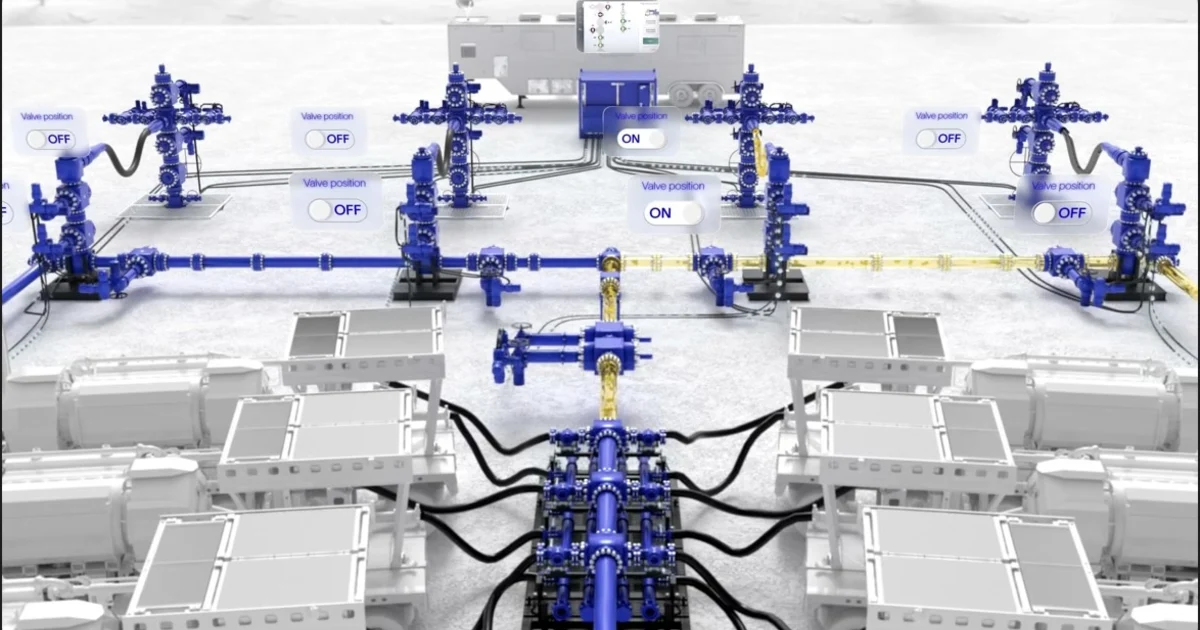
Before anyone on my team opens 3D software for a client like SLB or NOV, we have already read the engineering documentation, pulled CAD references where they exist, and walked our understanding past a technical subject-matter expert. That sequence is the reason a finished animation can survive a room full of people who know exactly how the equipment behaves. Asking the right questions in discovery and building accurate geometry in production are not two separate skills, they are the same skill showing up at two points in the timeline.
Gate three: are scope and ownership written down
Enterprise projects move slowly because approval is distributed across legal, brand, engineering, and sales leadership. Without a defined process, each of those voices multiplies the number of revision rounds, and the budget follows close behind.
The two questions that prevent expensive surprises
Ask how many revision rounds the scope includes and what triggers a change order. Then ask who owns the source files when the project closes. The models built for one animation have a second life as your next launch video, your training content, and your technical documentation, but only when you hold the editable files rather than the rendered output alone. Get the ownership language explicit in the contract instead of leaving it implied by the brief.
Gate four: is the timeline honest
Enterprise-grade 3D animation with genuine technical-review cycles runs roughly eight to sixteen weeks, depending on scene complexity and how many approval layers sit between kickoff and delivery. A studio promising four weeks on a complex industrial job is telling you one of two things, that it has underestimated the work, or that it intends to skip the validation that makes the work trustworthy. Both roads arrive at the same destination, with inaccurate animation surfacing in client review rather than before it.
What the gates are really screening for
Read together, the four gates filter for one quality a reel can never show: whether a 3D animation company treats your project as technical procurement with a creative output, or as a creative job that happens to involve machinery.
The 3D animation services my team provides for energy and industrial clients all run against that standard. The work spans nine projects with SLB, seven and counting with NOV on drilling and completions hardware, and energy-transition work with Liberty Energy. On every one, each clearance, fluid-flow direction, and assembly sequence is validated before a client ever sees it.
The companion piece on 3D animation for manufacturing companies covers the same accuracy challenge from the production side, and the full portfolio is where a track record either holds up or it does not. A studio capable of clearing all four gates tends to have a narrow, verifiable history rather than a broad and glossy one, and that narrowness is precisely what the gates are designed to surface.
See our 3D animation portfolio
Send me the brief and the engineering documentation you are working from. My team at Motion Giraffx will come back with a production approach, an honest timeline, and a clear picture of what technical-accuracy review looks like for your subject matter.
About the Author