The Sneaker Photo Trick Most Shoppers Never Notice
- Author: Cara Lackey
-
March 24, 2026
-
1159 words
-
6 minutes
- 3D Animation
- Product Rendering
The trick: that sneaker photo might not be a photo at all.
No studio. No photographer. No physical sample shipped across an ocean for a two-hour shoot. Just a digital model, rendered with enough precision that even the brand’s own marketing team sometimes can’t tell the difference.
This quiet shift has been building for years and the brands driving it aren’t treating 3D product rendering as some future experiment. It’s their production pipeline. Right now.
The real reason? Shoe photography doesn’t scale.
Picture this scenario.
You’re a marketing director at a mid-size shoe brand. Your team launches 300 SKUs this season, each in eight colorways. That’s 2,400 unique products needing images. Factor in multiple angles, lifestyle shots, and platform-specific crops, and you’re staring at 10,000+ assets for a single seasonal drop.
A single shoe photoshoot runs $500 to $2,000 per colorway. Per colorway. A shoe in ten colors means ten separate shoots, ten rounds of retouching, ten review cycles. The annual photography budget for a brand maintaining 200 to 500 active SKUs can hit seven figures without anyone blinking.
But the dollar figure isn’t even the real problem. Time is.
Physical samples need to be manufactured, shipped internationally, and inspected before a photographer touches them. Samples arrive late. They arrive damaged. Sometimes the colorway gets killed after the shoot wraps, turning all those images into expensive waste. I’ve watched brands lose weeks waiting for samples that were supposed to arrive last Tuesday, scrambling to hit a trade show deadline that doesn’t care about FedEx delays.
Then there’s the cost nobody budgets for: reshoots. The marketing team reviews images, wants a different angle, and the whole process restarts. Another line item. Another scheduling conflict. Another delay that ripples through every downstream deadline.
So what does the alternative look like?
One model changes everything
The concept behind 3D product rendering is deceptively simple. Build one digital model of the shoe. Use it to generate everything.
It starts with CAD files from the design team or a high-resolution scan of a physical prototype. A 3D artist builds the digital model from that source. Every stitch, every eyelet, every texture mapped with precision. Once that base model exists, the economics flip entirely. Generating a new colorway is just a material swap. Change the leather from black to tan, swap the mesh from navy to white, update the outsole from gray to gum. It’s minutes of work, not days of studio time.
The same 3D model outputs any angle. Top-down for e-commerce grids. Three-quarter for hero images. Close-ups of the midsole technology. Lifestyle composites placing the shoe on terrain, on feet, in motion. All from one source file.
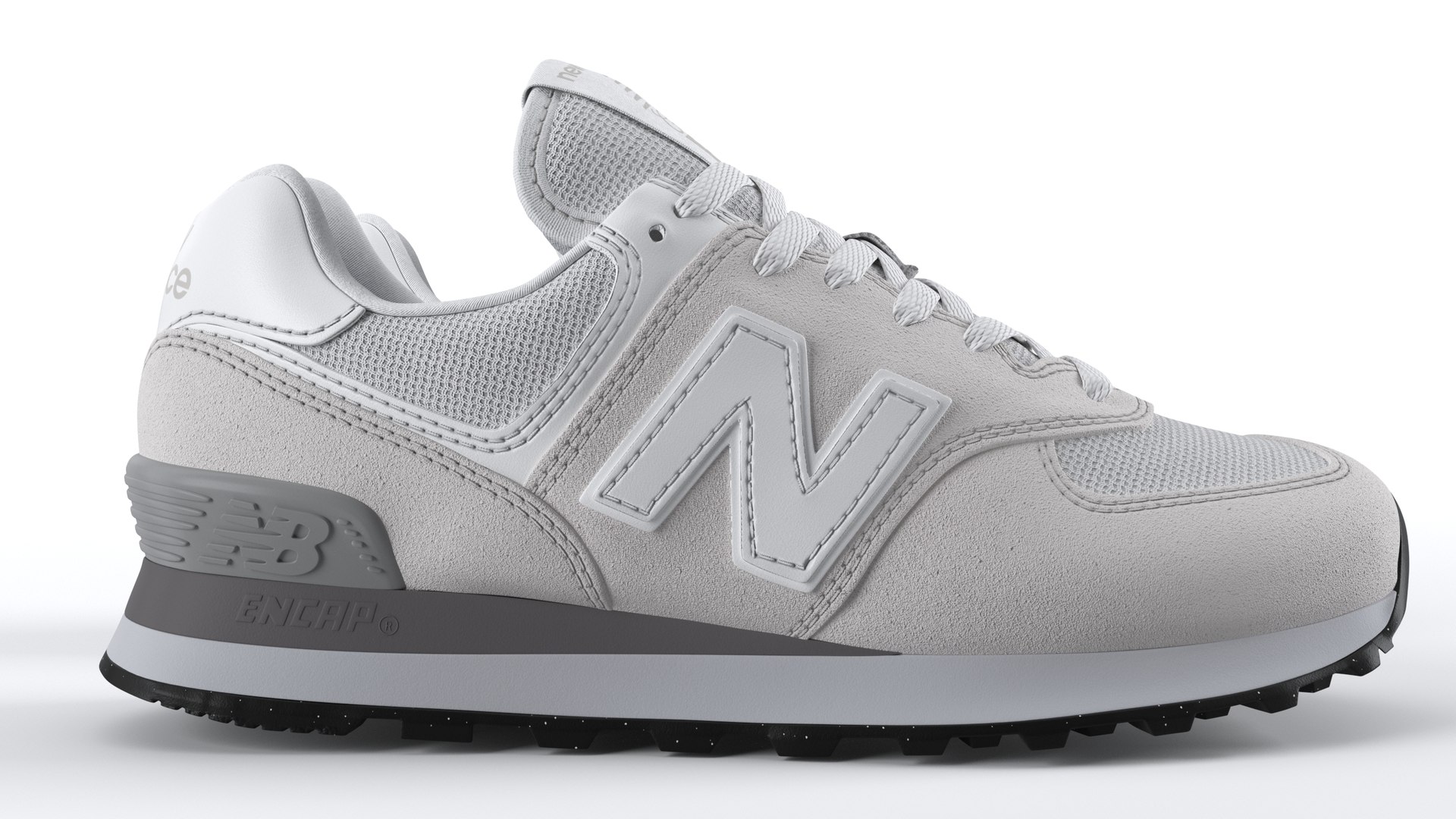
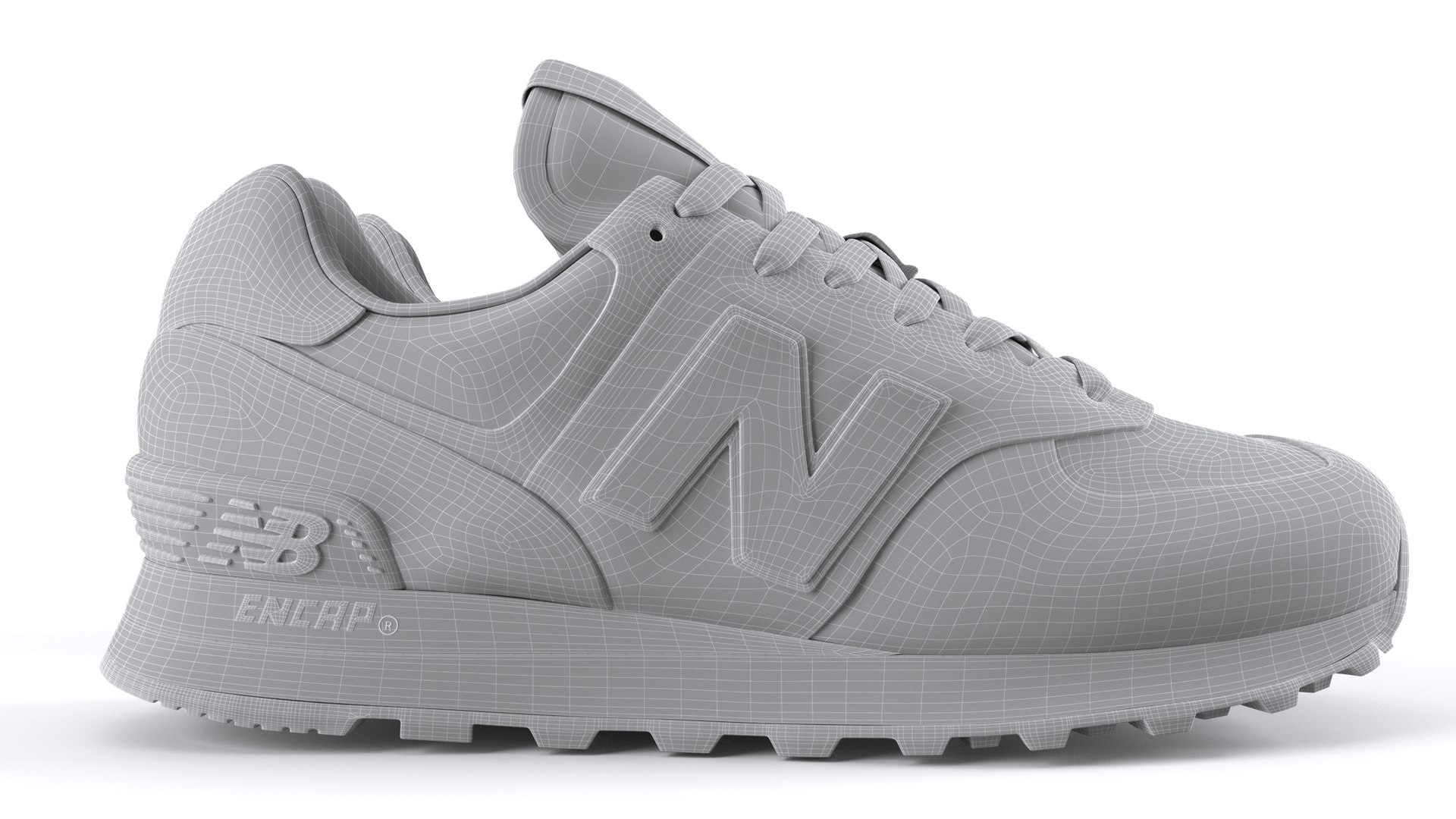
Material simulation is where things get genuinely surprising. Modern rendering engines handle leather grain with subtle pebbled-versus-smooth variations, knit textures with visible weave patterns that catch light through the mesh, rubber tread with accurate depth and surface sheen, metallic hardware that reflects environment lighting correctly, and stitching detail down to thread thickness and spacing.
All of this translates to a timeline difference. Consider traditional photography:
- design finishes
- samples get ordered
- samples ship internationally
- samples arrive and get inspected
- photography is scheduled
- images are shot and retouched
- assets are delivered
Six to ten weeks IF nothing goes wrong. Something ALWAYS goes wrong.
Now compared to product renderings which follow a different path:
- design finishes
- 3D model is built from CAD files
- colorways and angles are generated
- assets are delivered
Two to four weeks, including every variation the brand needs. That speed gap is the difference between having product pages live on launch day versus scrambling to fill them after the fact.
It’s a shift the industry is already pricing in. Grand View Research valued the 3D rendering market at $4.85 billion in 2025, growing at nearly 20% annually, with product visualization driving a significant share of that growth.
So far, this all sounds logical. Maybe even obvious. Reading about rendering quality and experiencing it, though, are two very different things.
Now look at this
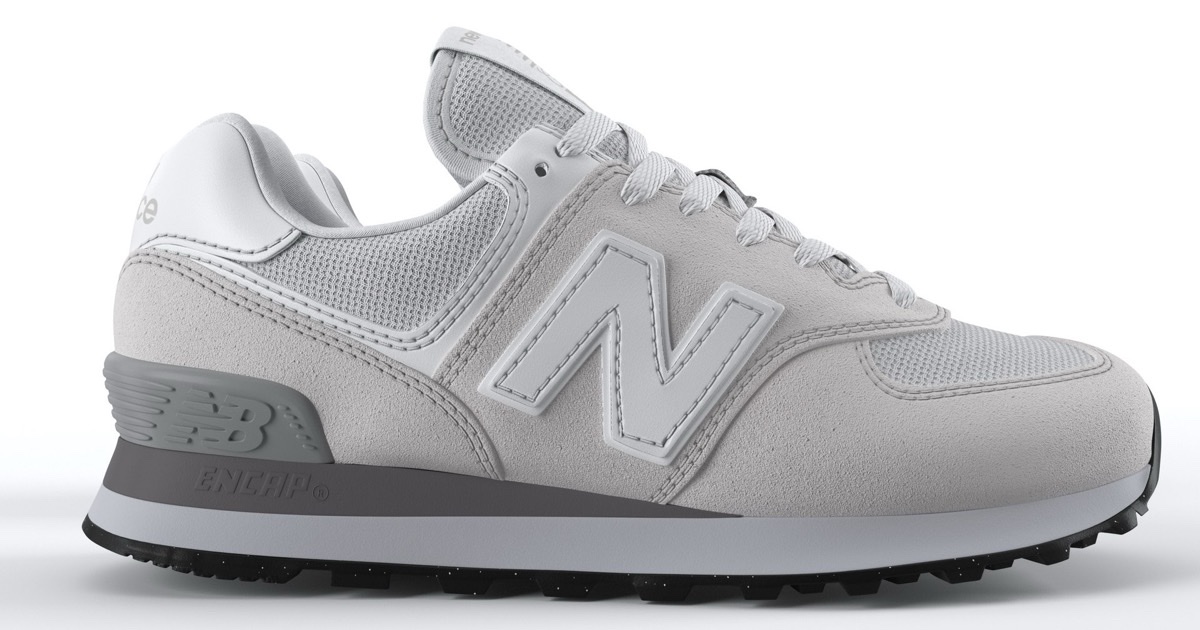
Drag to rotate. Scroll to zoom. Pay attention to the material detail. The texture of the surface, the depth of the tread, the way light behaves differently on leather versus rubber versus stitching.
This is the same rendering technology powering product pages for major footwear brands.
What you just interacted with isn’t a video. It’s not a pre-rendered animation. It’s a real-time 3D asset built with the same 3D animation techniques that feed product configurators, AR try-on experiences, and automated image generation pipelines. One model, built once, serving every channel a brand operates in.
That’s the fundamental difference between product rendering and product photography. A photograph is a single output. A 3D model is a system that generates outputs indefinitely — every angle, every colorway, every background and platform crop from one file.
For a deeper look at how renders compare to traditional photography in measurable performance, see why 3D product renders outperform photography.
That same 3D asset does more than generate product images. It powers the spin-and-recolor configurators shoppers now expect. When you customize a sneaker on Nike By You and watch the colorway update as you rotate the shoe in real time, you’re looking at the same kind of 3D model the marketing team uses. Built once, reused everywhere.
Try doing that with only photography. You’d need to shoot every possible combination and when options multiply into thousands of permutations, that’s not a scheduling problem. It’s an impossibility. Product rendering makes it trivial.
The model you built for this season’s e-commerce catalog becomes next year’s AR experience, the following year’s virtual showroom, and the configurator that lets customers design their own colorways. ONE investment compounds across every touchpoint.
Photography isn’t carrying the page alone anymore.
You scrolled back up to rotate that shoe again, didn’t you?
That impulse, wanting to interact with a product instead of just look at it, is exactly why brands like Nike and New Balance have been folding 3D into their product pages alongside traditional photography. Static images still serve their purpose. They just don’t do everything shoppers now expect.
Meeting that expectation with photography alone is expensive. Every season on a traditional photography pipeline is another round of sample shipments, scheduling conflicts, and assets locked into a single use. The render you saw in this article does not expire when you change a background. It doesn’t require reshoots when you add a colorway. It compounds in value every time you reuse it.
Send us your most complex product.
Seriously. The one with the tricky materials, the one that never photographs well, the one your team keeps re-shooting. My team at Motion Giraffx will show you what it looks like with our 3D product rendering service and what your entire catalog could look like once you stop needing a photography studio.
About the Author