2D vs 3D animation: Which style fits your next project?
- Author: Cara Lackey
-
January 6, 2026
-
666 words
-
3 minutes
- 2D Animation
- 3D Animation
- Explainer Video
The real question
You’re not actually asking which style looks better. You’re asking which one helps your audience understand.
That distinction changes everything. A photorealistic 3D render of HVAC equipment communicates something fundamentally different than an illustrated 2D explainer about the same technology. One says “this is exactly how it works.” The other says “here’s what you need to know.”
Both are valid. Both can be wrong for your project.
After producing animation for companies in industries ranging from manufacturing to SaaS platforms, I’ve found the decision comes down to one question: Is your subject tangible or abstract?
Tangible subjects favor 3D
- Physical products.
- Complex machinery.
- Equipment that needs to be seen from multiple angles, opened up, or placed in realistic environments.
When audiences need to trust that something works (not just understand what it does) 3D delivers visual proof. Oil and gas companies consistently choose this route because their innovations happen underground, inside sealed equipment, or in environments too hazardous for camera crews. You can’t film what cameras cannot reach.
3D also serves products that don’t exist yet. Pre-launch visualization, investor presentations, and trade show reveals all share a common need: photorealistic renders that substitute for photography of hardware still in development. The dimensional accuracy builds engineering credibility that 2D simply cannot replicate.
The investment is higher. Production takes longer. But 3D assets often justify that cost through reuse. The same renders appear in sales decks, website hero sections, trade show displays, and printed collateral.
Abstract subjects favor 2D
- Software workflows.
- Financial services.
- Organizational processes.
- Ideas that exist in the mind rather than the physical world.
This is where 2D animation earns its dominant market share. Roughly 70% of explainer videos use 2D because the format excels at translating conceptual complexity into accessible visual stories. SaaS companies gravitate here because you can’t photograph workflow automation. You illustrate it in ways that make invisible processes feel intuitive.
The cognitive load theory behind this is straightforward: 3D realism actually increases mental effort when the subject is abstract. All that photorealistic detail becomes noise when you’re explaining a data flow or service model. Using 2D simplifies. It strips away irrelevant visual information so audiences focus on the idea itself.
Production moves faster too. Fewer technical setup stages mean concept-to-completion timelines compress — often by 30-40% compared to equivalent 3D projects.
When neither answer is obvious
Sometimes the project demands both.
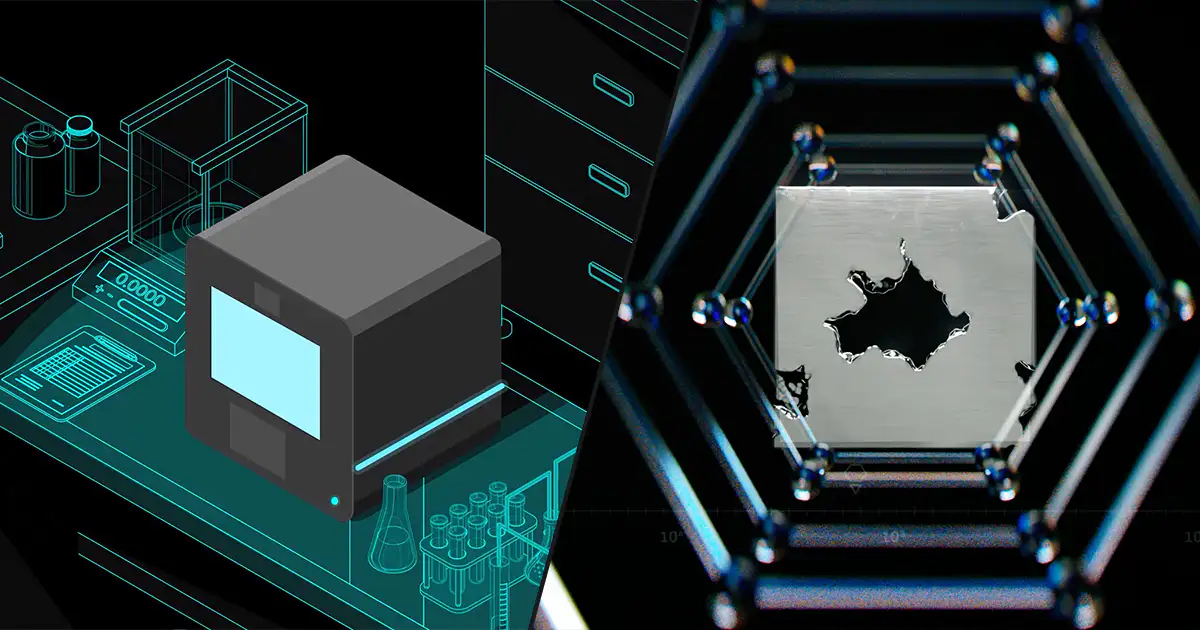
Hybrid approaches use 2D to establish context - Narrative framing, problem statements, emotional stakes. Then they switch to 3D when the product appears. This pattern shows up frequently in product launch videos where storytelling and photorealism both matter.
I’ve also seen the reverse - 3D environments with 2D animated characters, or photorealistic product renders integrated into illustrated explainer sequences. The technical boundaries between styles are more permeable than the “2D vs 3D” framing suggests.
Industry patterns worth noting
Energy and industrial sectors lean heavily toward 3D. Equipment visualization, process demonstrations, and technical accuracy drive purchasing decisions in these markets. When your audience includes engineers reviewing specifications, dimensional realism matters.
Professional services and software trend toward 2D. Clarity and accessibility outweigh photorealism when the goal is concept communication rather than product credibility. One B2B SaaS study found 2D explainers reduced sales cycles by 28%. Not because 2D is inherently better, but because it matched what the audience needed to understand.
Budget and timeline reality
Cost differences exist. 2D typically runs 20-40% less expensive than comparable 3D work, primarily because 3D production adds modeling, texturing, lighting, and rendering stages that 2D workflows skip.
That said, framing this purely as budget optimization misses the point. The wrong style at a lower price still fails to communicate. And the right style, even at higher investment, often generates returns that dwarf the cost difference. Match the medium to the message first. Optimize cost second.
Physical products that need dimensional credibility point toward 3D. Concepts that need clear explanation point toward 2D. Complex stories that require both… require both.
If you’re weighing animation approaches for an upcoming project, let’s discuss what the content actually needs, not which style is trending.
About the Author