How long should your explainer video actually be?
- Author: Cara Lackey
-
December 2, 2025
-
737 words
-
4 minutes
- Explainer Video
- Product Demo
The 60-second question everyone asks wrong
“Keep it under 60 seconds.” You’ve probably heard this advice so often it feels like gospel. And the data backs it up. Sort of.
Wistia’s 2025 State of Video Report, analyzing over 100 million videos, found that engagement rates dropped more than they have in four years. Short-form content took the biggest hit. But here’s what caught my attention: the report doesn’t blame shrinking attention spans. It blames higher expectations.
Viewers aren’t getting dumber or more impatient. They’re getting pickier. They’ve seen enough low-value content to recognize filler and when they see it, they bounce.
So the question isn’t really “how long should my explainer video be?” The better question is: how long does it need to be?
Why the standard advice falls short
The 60-second recommendation exists for good reason. Engagement does drop around that mark. Attention is scarce. Everyone’s busy.
But that advice assumes every video serves the same purpose. A LinkedIn ad interrupting someone’s scroll needs different pacing than a product demo sent to a qualified lead after a discovery call. A homepage explainer has different goals than a training video for new customers.
The real rule isn’t “keep it short.” It’s “keep it exactly as long as the message requires and not a second longer.”
What actually determines the right length
Three factors matter more than any universal rule.
Where the video lives shapes expectations immediately. Paid social ads need to earn attention in 15-30 seconds because you’re interrupting someone. Website visitors chose to be there, so 60-90 seconds works for homepage explainers. Sales enablement content can run 2-3 minutes because the audience is already interested. Training videos often hit 3-5 minutes because viewers are motivated to learn.
How complex is the subject? This is where industrial and B2B content breaks from the standard advice. Explaining a SaaS dashboard in 60 seconds? Reasonable. Explaining autonomous aircraft navigation systems or ruggedized computing hardware in that same window? You’ll sacrifice clarity for brevity and confused viewers don’t convert.
When I create explainer videos for aerospace and defense clients, the technical complexity often pushes runtime to 90-120 seconds. Engineers evaluating mission-critical equipment expect sufficient detail. They want to understand how it works, not just that it exists.
Where does the viewer sit in their buying journey? Your awareness stage content can be shorter. You’re introducing a problem and hinting at a solution. Consideration stage viewers are comparing options and need more information to narrow choices. Decision stage audiences are ready to buy and need the confidence that your solution actually delivers. Two minutes isn’t just acceptable there. It’s often necessary.
Building videos that actually hold attention
Here’s the thing: length is a proxy metric. What actually matters is engagement. Specifically, what percentage of your message lands with viewers.
A 90-second video with 80% average completion outperforms a 45-second video with 40% completion. The goal isn’t minimizing runtime. It’s maximizing message retention.
Structure over seconds
Pacing determines whether viewers stay more than arbitrary time limits. McKinsey’s research on consumer attention reinforces this: the media industry has focused on quantity of attention rather than quality. That means viewers will watch longer content if that content earns every second.
Hook immediately — The first five seconds determine whether viewers stay or leave. Not the first fifteen. Five. Lead with the problem your audience recognizes, not your company introduction.
Front-load value — Put your most important points early in the video. If someone drops off at the halfway mark, at least they heard what matters most.
Earn every second — If a section doesn’t add value, cut it. Length isn’t the enemy. Filler is. Two minutes of focused, well-structured content holds attention better than sixty seconds of rushed confusion.
Finding your answer
Start with the message, not the clock.
What does the audience need to understand? How much technical complexity must the video communicate? Where will it live? Homepage, social, sales deck, trade show booth? What action should viewers take next?
The answers point toward the right length. Sometimes that’s 30 seconds. Sometimes it’s three minutes. Both can be correct depending on what you’re trying to accomplish and who you’re trying to reach.
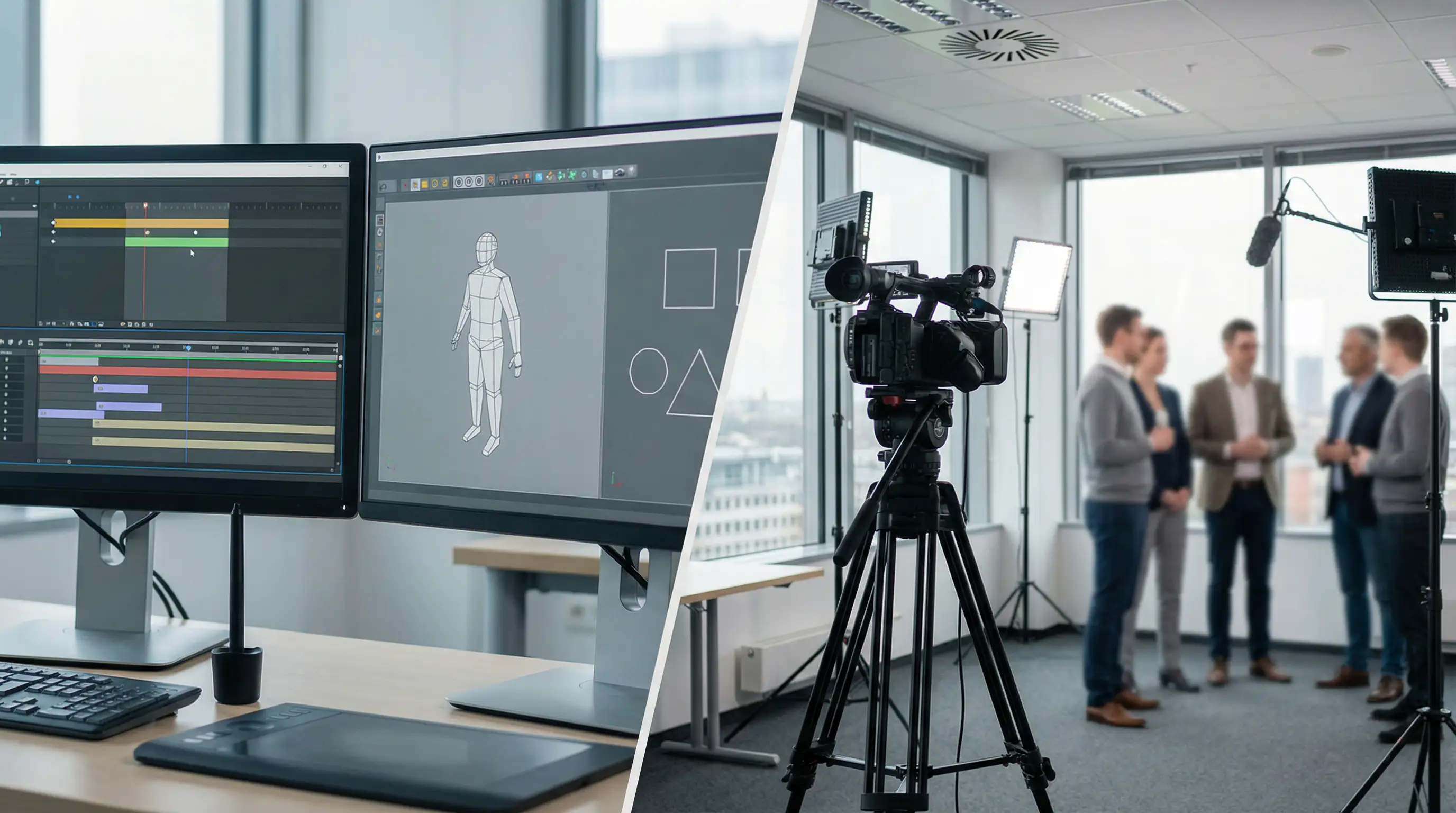
The choice between 2D animation for awareness content and 3D animation for technical decision stage content follows the same logic. Match the medium and the duration to the moment.
Let’s talk about your project. We’ll help you find the length that serves your audience and your objectives. Not an arbitrary rule that ignores both.
About the Author