Motion graphics vs animation: When to use each for B2B marketing
- Author: Cara Lackey
-
May 5, 2026
-
2074 words
-
11 minutes
- 2D Animation
- 3D Animation
- Explainer Video
Motion graphics is a subset of animation, not a separate field. Motion graphics animates graphic design elements (text, logos, icons, infographic shapes, data) while animation is the broader umbrella that also includes character animation, narrative animation, traditional drawn animation, and stop motion. Every motion graphics piece is animation. Not every animation is motion graphics.
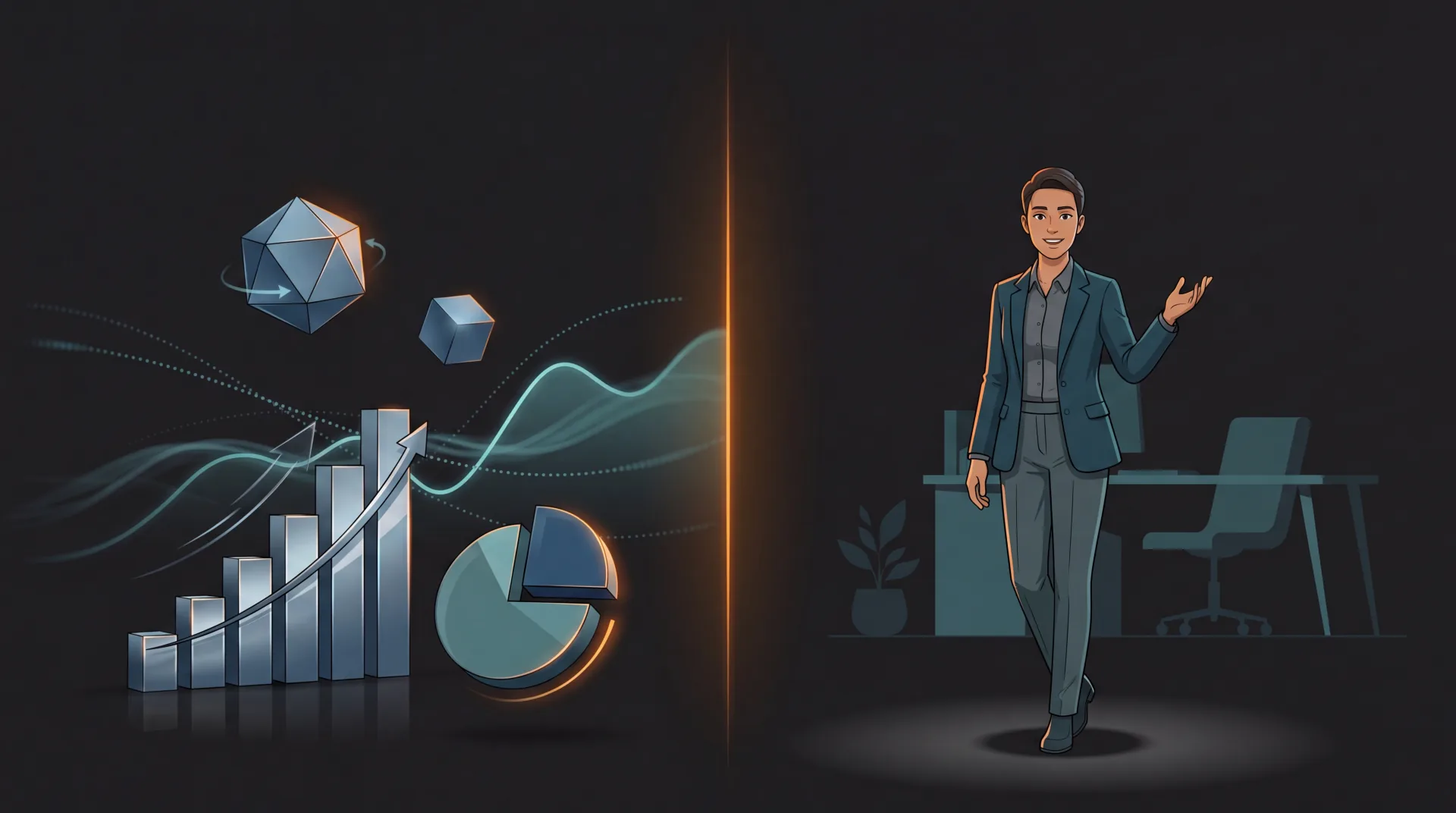
For a B2B marketing buyer, the practical question is simpler than the taxonomy. Are you making graphic design move, or are you telling a story with characters and scenes? Most B2B videos blend both. The decision still matters, because production timeline, cost, and audience reaction all change based on which one leads the cut.
I produce both formats every week at my studio, and the question I hear most often from marketing managers is some version of “we got three quotes and they all use the words differently.” This post is the answer I usually give.
The technical difference in 30 seconds
Motion graphics is animated graphic design. Type sets in, a chart fills, an icon rotates, a logo resolves out of geometry. The work happens mostly in After Effects with vector and shape layers. The vocabulary is design vocabulary: kerning, easing, hierarchy, grid.
Animation is the umbrella. It covers character animation (a person or creature acting on screen), narrative animation (scenes that build a story), traditional 2D, 3D animation, stop motion, and yes, motion graphics too. The vocabulary is performance vocabulary: pose, timing, arc, weight, anticipation.
The practical takeaway for a B2B buyer: if your video could exist as a poster that started moving, it is motion graphics. If your video has a “cast,” even if the cast is one stylized character, you are commissioning animation in the broader sense.
Quick comparison table
| Motion graphics | Full animation (character/narrative) | |
|---|---|---|
| Definition | Animated graphic design: type, shapes, icons, data | Storytelling with characters, scenes, performance |
| Primary B2B use | Data, kinetic typography, social cuts, trade show loops | Brand films, narrative explainers, training scenarios |
| Production timeline | 2 to 5 weeks typical | 4 to 8 weeks typical |
| Relative cost | Lower per finished minute | Higher per finished minute |
| Audience reaction | Clarity, polish, “this brand is sharp” | Empathy, recall, “I remember that story” |
| What it does best | Make abstract data feel kinetic and confident | Make a person care about a person, problem, or product |
| What it cannot do | Carry a long emotional arc on its own | Hit a 15-second sound-off feed without compromise |
The timeline and cost ranges are directional, drawn from what actually happens in working studios. Specific numbers depend on script length, asset complexity, voiceover, and revision rounds.
When motion graphics wins
Motion graphics is the right call when the message itself is graphic. The information IS the visual.
Data-heavy explainers
If your script reads like a board deck (this much revenue, that much reduction, this many customers, that much faster), motion graphics handles it better than character animation. A figure rises from zero to the final number, a bar chart fills, a pie wedge animates in. The audience reads and absorbs. Character animation around the same data tends to bury the numbers under a story they did not come for.
Kinetic typography and social cuts
Sound is off more than marketers want to admit. LinkedIn’s own research found that only 37 percent of mobile B2B viewers watch with sound on, and 21 percent watch with sound permanently off. That is the kinetic typography use case in one statistic. When the words have to do the heavy lifting visually, motion graphics is the medium that was designed for it. Logo stings, quote videos, lower thirds, captions-as-motion. All motion graphics, all earning their keep on a feed scroll.
Process and workflow visualizations
SaaS feature flows, onboarding diagrams, integration maps, supply chain process loops. Anything that lives as a flowchart on a sales deck animates better as motion graphics than as a character explaining the flowchart. The medium matches the message: structured information, visualized in motion.
Trade show and screen content
Booth loops, lobby screens, conference reel content. Motion graphics is loop-friendly, audio-independent, and renders fast enough to iterate the day before the show. Character animation does not love being silenced and looped.
If you are weighing a 2D motion graphics package against a more illustrative direction, our 2D animation services page walks through both and shows examples of each.
When full animation wins
Full animation, the kind with characters, scenes, and performance, wins when you need the audience to feel something, not just understand something.
Character-driven brand stories
If the brief is “we want our customer to see themselves on screen,” motion graphics will not get you there. A small set of recurring characters who embody the customer, the user, the persona is what carries the emotional arc. A character does in three seconds what bullet points cannot do in thirty.
Narrative product explainers
Day-in-the-life scenarios, before-and-after transformation stories, the “imagine you” framing that the best explainer videos rely on. These need a person on screen, even an animated one, to anchor the empathy. Once a viewer has a character to root for, the product reveal lands harder. Our explainer video work leans on this principle constantly.
Long-form education and training
Compliance training, healthcare scenarios, financial services walk-throughs, anything over two minutes that needs to keep humans watching. Pure motion graphics over a long runtime starts to feel like a never-ending pitch deck. A character (or two, in conversation) reset the eye and re-engage attention every time they appear. For products that need dimensional realism (industrial equipment, hardware, anything where viewers want to “see how it works”) my team often pairs character framing with 3D animation of the actual product.
The hybrid case (most B2B work)
Here is the part the design school articles do not say out loud. Most B2B videos that ship are hybrids.
A typical 90-second explainer in my studio looks like this. Open with 10 to 15 seconds of character animation that sets up the problem and the persona. Cut to motion graphics for 30 to 40 seconds when the script hits the data, the workflow, or the product feature breakdown. Return to character animation for the close, the emotional payoff, and the call to action. Subtitles on throughout, because Wyzowl’s 2026 video marketing report shows 93 percent of marketers say video has helped increase user understanding of their product or service, and that understanding gets cut in half the moment the audio drops.
Purist labels mislead buyers. The brief is not “do we want motion graphics or animation.” The real brief is “where does each one earn its place in this specific cut.” A studio that answers your RFP with one or the other and refuses to mix is solving for their preferred workflow, not your message.
If your B2B project is closer to a SaaS demo than a brand film, the medium choice gets even more specific. We covered the SaaS-side decision in the SaaS product demo video mistake post, which is the companion read for software teams. For buyers who have already committed to animation and are now choosing between flat illustration and dimensional rendering, our 2D vs 3D guide handles that next decision.
5 questions to decide which one fits your brief
When a marketing director sends me a brief and asks “motion graphics or animation,” I ask these five questions back. The answers settle it 9 times out of 10.
- Does the video have to carry an emotional arc? If yes, characters earn their place. If the goal is clarity and polish without emotion, motion graphics is enough.
- Will it run sound off most of the time? LinkedIn feed, Instagram, conference booth, lobby screen. If yes, lean into motion graphics and kinetic typography. The visuals have to carry the message alone.
- Is the message data-first or story-first? Data-first scripts (numbers, percentages, workflows, comparisons) animate cleaner as motion graphics. Story-first scripts (transformation, customer journey, founder origin) need characters.
- Is the audience evaluating a product or empathizing with a person? Product evaluation rewards motion graphics that show the thing clearly. Empathy rewards a character on screen. B2B buyers evaluate, end users empathize. Know which one this video is for.
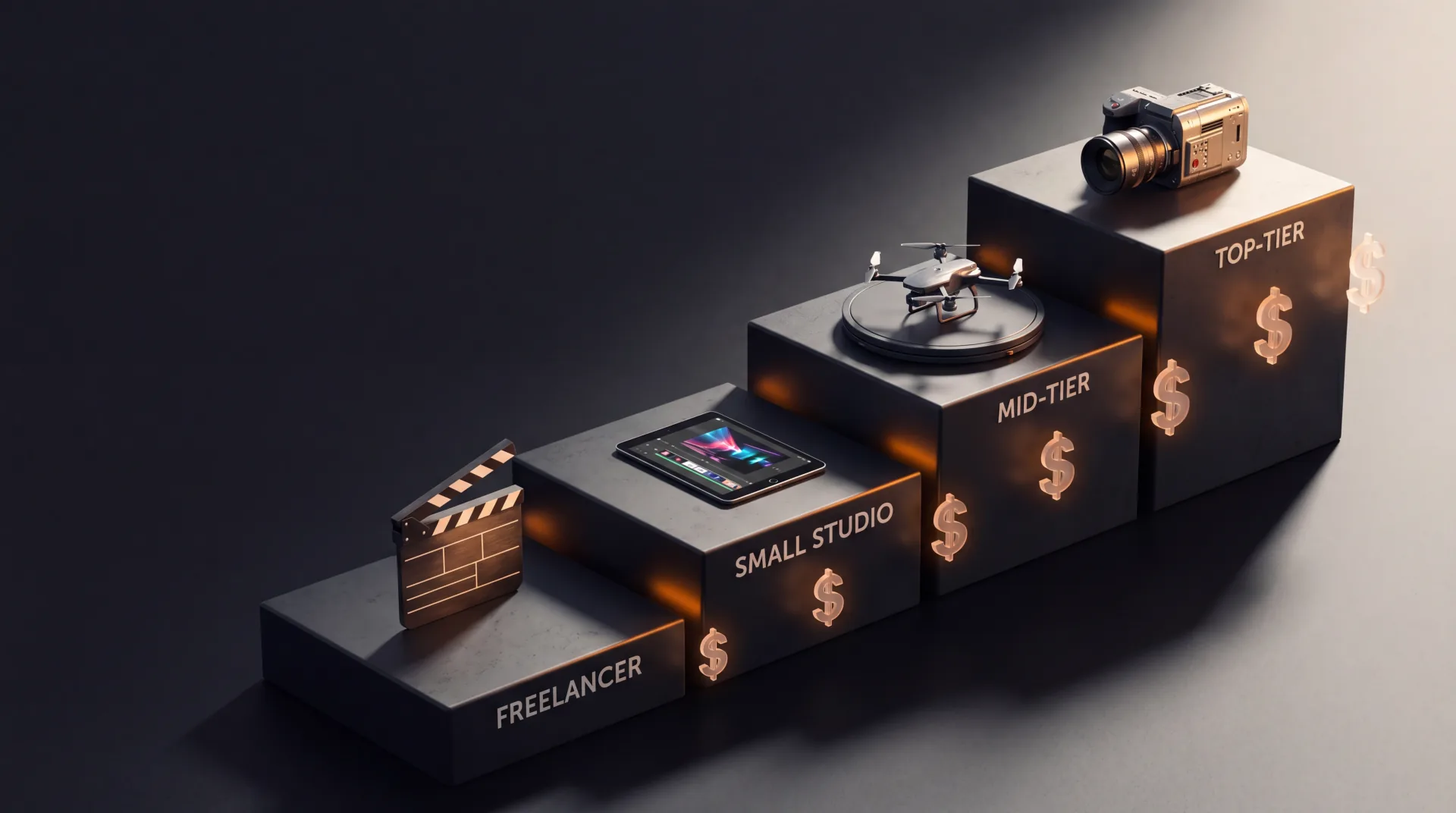
- What is the budget tier? Motion graphics is faster to produce per finished minute and lands closer to the lower end of B2B animation budgets. Full character animation costs more because it has more moving parts (script, design, storyboards, character rigs, animation passes, sound design, often a voice actor). If the budget is tight and the message is graphic, motion graphics gets you a sharper finish than under-funded character work.
If three or more answers point one direction, the medium is decided. If the answers split, you are looking at a hybrid, and the conversation moves to which sections of the cut go which way.
What each typically costs and how long each takes
I will not invent numbers in this post, because production cost depends on script length, asset complexity, voiceover, music licensing, and revision count, and any specific dollar figure I cited would be a lie of false precision. The directional truth is reliable, though.
Motion graphics is faster and cheaper per finished minute than full character animation, primarily because it skips the design and animation passes that characters require (character design, rigging, performance animation, lip sync). Full animation is slower and more expensive because the asset pipeline is longer.
For an actual cost breakdown with realistic ranges, the companion post on explainer video cost goes deeper. If you want to see the spread of work across both formats, our video portfolio shows live examples filtered by tag.
People also ask
What are the 4 types of animation?
The four traditional categories are 2D animation, 3D animation, motion graphics, and stop motion. Some classifications add a fifth (traditional hand-drawn or cel animation) as distinct from modern 2D digital. Motion graphics belongs inside this list, not next to it. That is the technical answer. For a B2B brief, the more useful categorization is character vs graphic, because that maps to what the audience actually sees and feels.
Is motion graphics replacing traditional animation?
No. Motion graphics has grown faster than character animation in B2B marketing volume because social feeds, sound-off viewing, and data-heavy explainers all favor it. That growth is additive, not replacement. Character and narrative animation continues to win the briefs that need emotional arcs, brand storytelling, and longer-form education. The two formats live in different parts of the funnel and serve different audience needs.
Is AI replacing animators?
Not at the level of work most B2B clients commission. AI tools have changed parts of the production pipeline (style frame generation, voice cloning for scratch tracks, rough lip sync). The hard parts (creative direction, brand-aligned design language, performance animation that actually communicates) still require humans. AI is a tool inside the studio, not a replacement for it. Reasonable studios are integrating AI where it helps and protecting the parts that do not benefit from it.
Can a single video be both motion graphics and animation?
Yes, and most polished B2B videos are. A 90-second explainer with a character open, motion graphics for the data section, and a character close is technically both. It is also the most common shape of work that ships out of my studio. The labels are useful for scoping budget and timeline. They are not useful for picking sides.
How my team approaches the choice
When a brief lands at our studio, the first conversation is never “do you want motion graphics or animation.” It is “what does the audience need to feel, understand, and do after watching this.” The medium falls out of the answer. Sometimes it is one format end to end. More often it is a deliberate mix, scoped to the brief and the budget. I would rather a client commission the right hybrid for their message than the wrong purist version of either format.
If you already have a script, a deadline, or a quote on the table, send it over. I will tell you which sections want motion graphics, which sections want full animation, and what the realistic timeline and budget look like for the cut you actually need.
Request a quote and I will scope the right mix for your project
My team at Motion Giraffx has produced both motion graphics and full animation for B2B, SaaS, energy, healthcare, and industrial buyers since 2008. Send the brief, get a scoped estimate back, no agency padding and no purist sales pitch.
About the Author